
Built for cannabis, not adapted to it
Tissue culture lab management software built for cannabis.
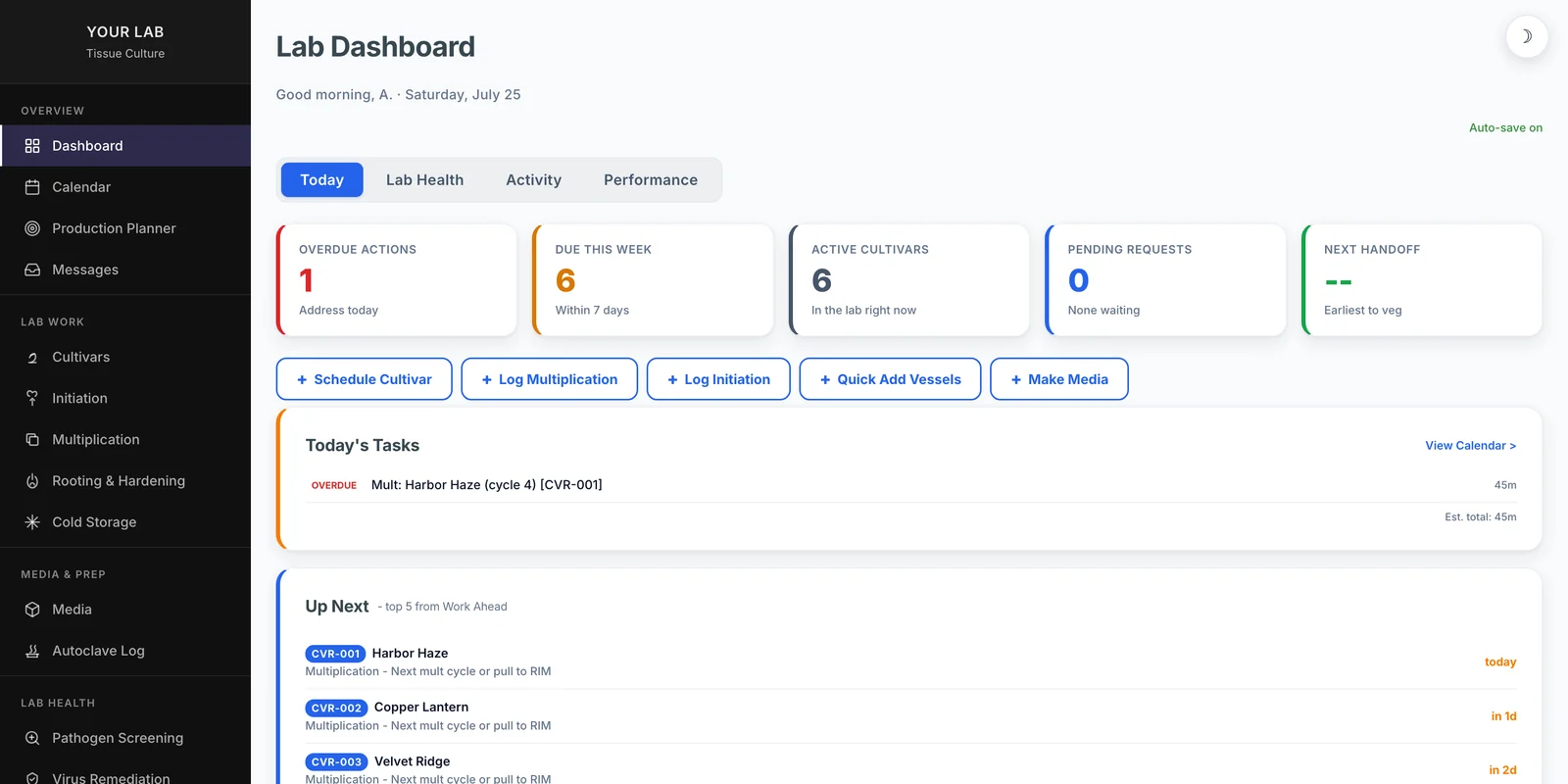
The Collective Herb lab platform is built for commercial cannabis operations. Bring culture records, production schedules, pathogen status, media, labels and stage handoffs into one connected workflow. See today's lab work and where production stands, using the records your team enters at the bench.
Developed on the lab floor and used in commercial production.
$450 a month for the first 10 labs, held for an initial two year term; $800 standard. Claiming a seat takes no card, and nothing is charged until your lab is live.
License it for a lab you already run, or get it included when we build yours.
Why it exists
Spreadsheets work for a few cultivars, then they quietly fall apart.
A handful of cultivars is easy to track by hand. Add more cultivars, more batches, more stages, and more people, and the manual inputs pile up until the tracking takes more labor than the growing. The math gets missed, the flags come late, and headcount climbs to keep up.
One connected system
Log the bench work once. The rest of the operation stays in sync.
Your tech records the biological facts, the ones only a person at the hood can know. From that single entry the platform updates the records that depend on it, so the schedule, the handoff, the media count, and the dashboard numbers stay based on the same entry.
A tech logs one multiplication
Copper Lantern · CVR-003 · 98 shoots, 20 elongated
- Batch record and audit trail written, with who logged it and when
- Next cut re-anchored on the multiplication schedule and the calendar
- Elongated shoots roll into RIM as a rooting record for the handoff
- Media usage reflected in your available-vessel inventory
- Mult rate and populations recalculated on the dashboard
- Label sheet pre-filled for that run, one click to print or queue
The team knows what is next, and you can see whether production is on track.
Evaluating software for your lab? Read our guide to what cannabis tissue culture lab software needs to do.
Plan, run, improve
Plan against the grow's dates, run the day, and get better every cycle.
The same records drive all three, so the work your team logs at the bench does not get re-entered somewhere else, and the numbers you plan with are the numbers they actually produced.
Plan backward
Your grow's dates drive the lab's work.
The lab does not run on its own calendar, it runs on the grow's. The platform reads each room's flip schedule, works back to the day the lab has to have rooted shoots ready to send, and puts every upcoming job in front of the team soonest first.
- Every upcoming job ranked soonest first: overdue, due this week, still building
- Live rooted-shoot counts measured against the send target for that flip
- A delivery-date calculator that works back from a requested date to the latest day initiation can still start
Run the day
Every cultivar, every stage, with today's work ranked worst first.
Open the app and see overdue work, cold-storage backups due, low supplies, and pathogen flags, ranked worst first. Underneath it, initiation through cold storage runs as one connected flow, so the next cut and the next handoff are projected from what you already logged.
- Needs-attention triage pulled live from every log, one click into the record
- Auto-calculated next-mult and handoff dates, planned by room and generation
- Mult-rate math, finishing-tub counts, and A/B cold-storage rotation handled for you
- Cradle-to-grave traceability: a bad media batch, and every downstream culture in one view
Improve
Learn from every cultivar and recipe.
Every multiplication, rooting, and hardening entry rolls up into per cultivar and per recipe scorecards, so the question "which media actually works for this cultivar" has an answer from your own runs instead of a habit.
- Average multiplication rate and elongation rate, by cultivar and by recipe
- Best performing media per cultivar, and which recipes to cull
- After three logged cycles, planning uses that cultivar's measured rate instead of the default
Your genetic library
Every cultivar in one library, with its CVR ID, meristem and nodal lines, and screening status. Rare genetics and their lineage history, visible in one place.
Media, batches, and inventory
Calculate a recipe, track every media batch by ID, see which recipes perform best, and get low-stock reorder prompts, with autoclave runs logged.
Label printing
Batch-accurate labels on Avery sheets, one sticker per cultivar and media, with full traceability.
Client portal
Your growers request cultivars and watch progress in a clean portal, scoped to only their data.
Techs get clear work, lab leads get control, and whoever answers to the grow gets a straight answer about where the plants are. Real logins and real roles decide what each person can see and change, row-level security keeps every lab's data isolated, and it all works where the work happens, on a laptop or a tablet at the hood.
Pricing, before you keep reading: $450 a month for the first 10 labs, $800 after that, the same product either way. The details are further down.
Purpose-built
Generic software tracks containers. This tracks the biology.
The platform understands the distinctions that decide whether a cannabis tissue culture program works: cultivar identity, nodal and meristem lines, HpLVd status, multiplication performance, RIM readiness, and the handoff into production.
- Nodal and meristem lines kept distinct under one cultivar, and counted separately
- Pathogen status carried per line, with a dated history behind every clean-stock call
- Media outcomes tied back to how each cultivar actually performed on them
- Grow deadlines translated into the lab work that has to happen first
Clean genetics
Every HLVd result on record, and the remediation behind it.
HLVd silently drains potency and yield. Log qPCR results and attach the lab PDF per cultivar, track clean versus positive lines over time, and follow a remediation through meristem cleanup until the line tests clean. Your whole cultivar library, every CVR and every line, lives in one place.
- qPCR and Cq results logged per cultivar, with the lab PDF attached
- Clean vs positive lines and remediation progress, tracked over time
- A living cultivar library: CVR IDs, meristem and nodal lines, cradle to grave
Screening down to the meristem
The science behind clean stock.
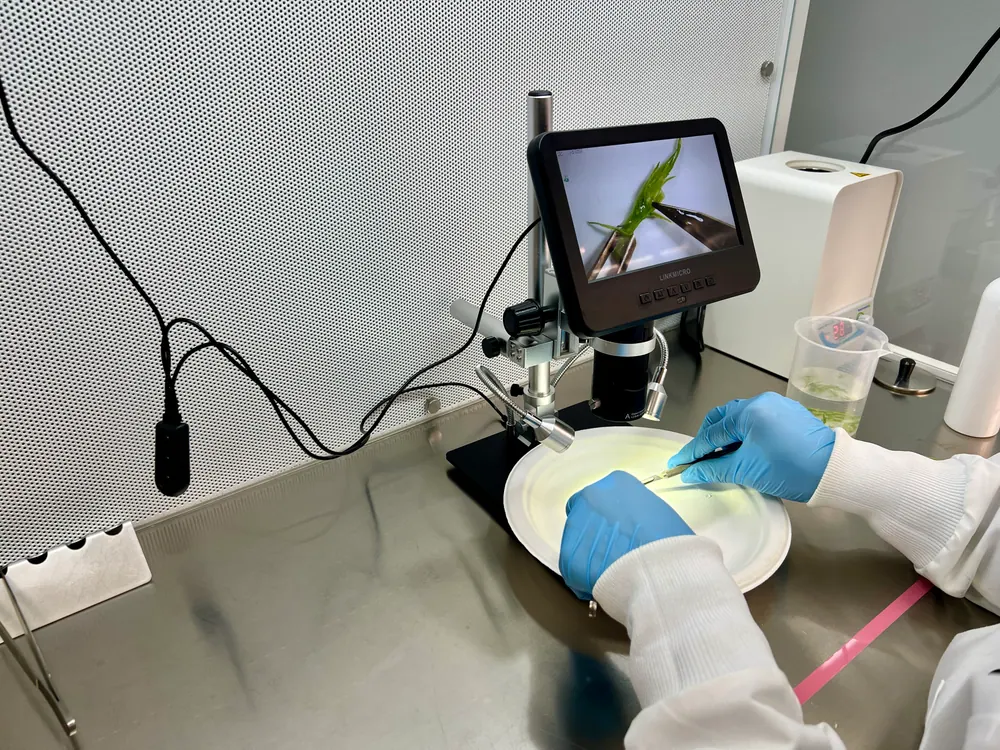
HLVd silently costs potency and yield. We isolate the clean tip, verify it, and rebuild your library. The platform tracks every step, so the clean-stock call is backed by a dated record instead of a memory.
Lab health
Catch contamination before it spreads.
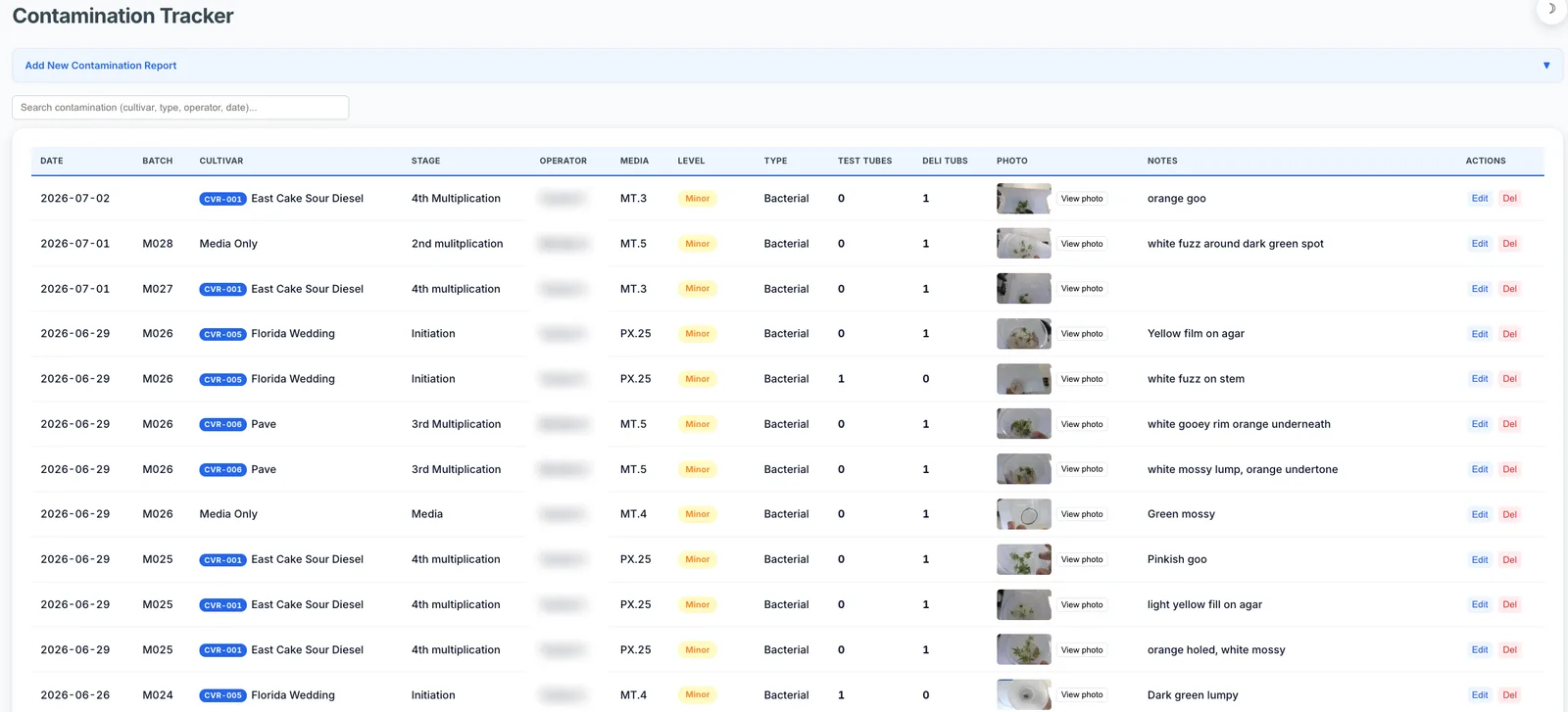
Log every contamination event with a photo, media batch, stage, and operator, then see the trend by cultivar and recipe. When a rate starts climbing in one recipe or one stage, you can see it in the record instead of finding out at the next transfer.
- Contamination by cultivar, stage, recipe, and operator
- Photo, level, and notes on every entry
- Trace a bad media batch to every culture it touched
Built on the lab floor
Not a generic tool, and not a login you are left to figure out.
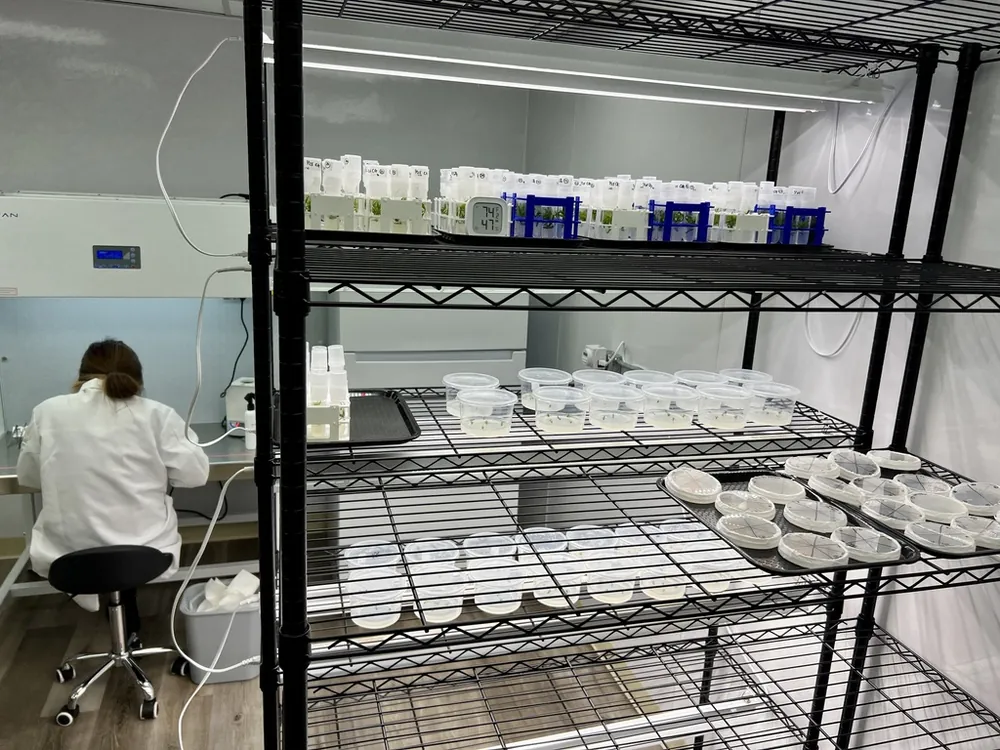
David spent 5+ years in tissue culture and 15+ years in commercial cannabis cultivation, including leading plant pathology and 150+ client facility visits as Director of Customer Success at a top tissue culture lab. He built this platform out of that experience, and it now runs in the commercial labs Collective Herb designs and builds.
Software alone does not make a lab run. We set up your tenant, bring your cultivars and media recipes in, and train your team on their own data, not on a demo. Then we help you shape the records and the daily workflow around how your lab actually works, so the platform becomes the way the team runs production instead of another system nobody updates.
Pricing
10 founding seats at $450 a month.
Standard is $800. Both are the same product; there is no cut-down tier, no per-user pricing, and nothing held back to sell you later. The founding rate exists because we set each of these labs up by hand, one at a time, and the first 10 get that attention while we are still small enough to give it.
Founding
Held for an initial two year term.
- Everything in the platform, no feature tiers and no per-user pricing
- Fixed for two years, then no single renewal raises it by more than 25%
- We set up your tenant and bring your cultivars and media recipes in
- Direct line to the people who build the labs
Standard
The rate once the founding seats are gone.
- The same platform, the same setup, and the same onboarding
- Month to month, cancel whenever
- Your data exports whenever you want it, including after you stop paying
You are not charged today.
- You claim a seat. Tell us about your lab. No card, no charge, and it holds your place in the 10.
- We review it by hand. David looks at every request, usually within a business day. If the 10 founding seats are gone by then, we tell you before anything is charged.
- We build your tenant. Your cultivars, your media recipes, your people, on your own data rather than a demo.
- Billing starts the day your lab goes live. Not at signup. If we are not the right fit, we say so and your card is never used.
Worth saying plainly: if you are running a handful of cultivars with one technician and a spreadsheet that still works, buy this later. Software does not fix technique, and we would rather say that now than take your money for a year while you find out. It starts paying for itself the day you cannot answer how many clean shoots of this cultivar do I have right now without opening three files.
Full terms, cancellation, and data ownership. Rather see it running first? Book a live walkthrough and bring your production schedule.
Platform FAQ
Questions about the lab platform.
How much does the Collective Herb lab platform cost, and can I get it on its own?
The Collective Herb lab platform is $800 a month, and the first 10 labs get a founding rate of $450 a month that is fixed for an initial two year term, after which no single renewal can raise it by more than 25%. It is the same product either way: no feature tiers, no per-user pricing, and nothing held back to sell you later, and setup and onboarding are included. You can license it on its own for a lab you already run, or get it included when we build your lab, in which case it is running before your team starts production.
What happens when I sign up for the lab platform, and when am I charged?
Claiming a seat takes no card and costs nothing; it holds your place while we review. We look at each lab by hand, usually within a business day, because we set these tenants up ourselves and take them one at a time. Then we build your tenant with your cultivars, your media recipes, and your people, and train your team on your own data rather than a demo. Billing is set up with you when we onboard your lab and starts the day it goes live, never at signup.
Is there software specifically for cannabis tissue culture labs?
Yes. The Collective Herb lab platform is tissue culture lab management software built specifically for commercial cannabis, not a generic lab system, not a seed-to-sale compliance tool adapted after the fact, and not an ornamental-plant system. It tracks cultivars, cultures, and media recipes through every tissue culture stage from initiation to cold storage, records your HLVd and pathogen results and the remediation history behind them, and holds your genetic library. It was built by the team that builds cannabis tissue culture labs, and it runs in those labs today.
Is the lab platform secure, and can other labs see my data?
The Collective Herb lab platform is multi-tenant software where every lab's data is fully isolated from every other lab. Row-level security enforces that isolation at the database, so one lab can never see another lab's cultivars, results, or growers. Every user has a real login and a real role, and your growers only see the data scoped to them. Your genetics and your records stay yours.
Does the platform replace my spreadsheets?
Yes, the Collective Herb lab platform replaces the spreadsheets that break down as a lab grows. Your techs still record the biological facts, the ones only a person at the hood can know, but they record them once instead of rekeying the same run into three different tabs. From that entry the platform tracks the culture from initiation to cold storage, does the mult-rate and finishing-tub math, re-anchors the next cut on the schedule and the calendar, and keeps the dashboard numbers current.
How do we get onboarded onto the platform?
Onboarding the Collective Herb lab platform means we set up your tenant, load your cultivars and media recipes, and train your team on their real data. When the platform comes with a lab build, it is running before production starts, so your first cultures are logged in the system from day one. For a standalone lab, we bring your existing library in and get your team working in it, not learning it in the abstract.
Does the platform work at the bench, or only in an office?
The Collective Herb lab platform runs in the browser and works at the bench, on a laptop or a tablet at the hood, where the work actually happens. You log initiation, multiplication, contamination events, and pathogen results at the point of work, with a photo on every contamination entry, so the record is accurate instead of reconstructed from memory at the end of the day.
Who owns the data in the platform?
Your lab owns its data in the Collective Herb lab platform. Every cultivar record, qPCR result, contamination log, and media batch belongs to your lab, and your tenant is isolated from every other lab by row-level security. The model is autonomy, not lock-in. We built the platform to run your operation, not to hold your records hostage.
See what your lab looks like on one connected system.
If you already know what you need, take a founding seat and we will build your tenant. If you want to see it first, bring your production schedule, your current workflow, and your biggest bottleneck to a walkthrough, and we will map the platform to the way your lab actually runs, using real data rather than a canned demo.
$450 a month for the first 10 labs, held for an initial two year term; $800 standard. Claiming a seat takes no card, and nothing is charged until your lab is live. Full terms.